Karreebosch a shift towards new model

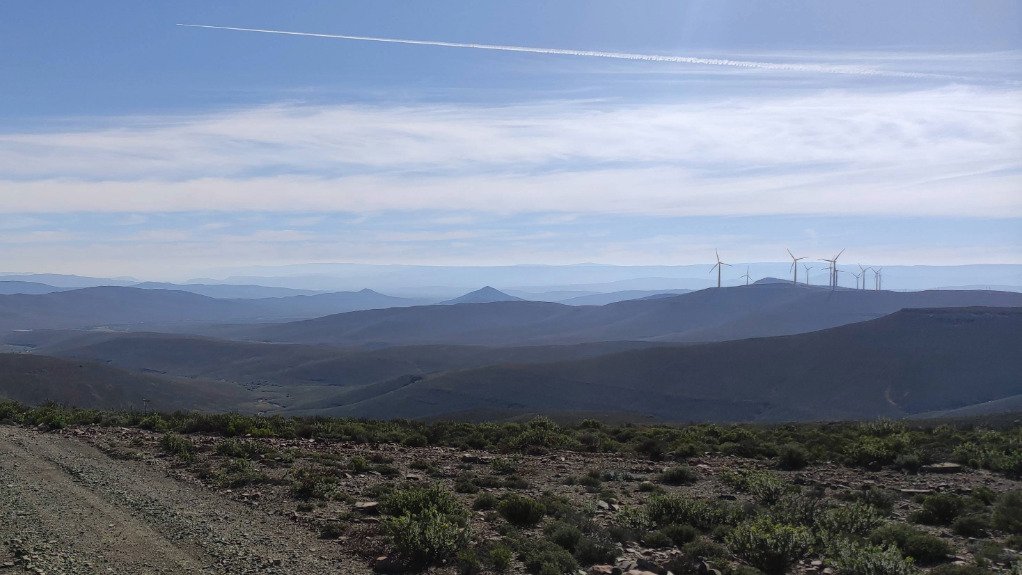
PRIVATE POWER MOMENTUM The Karreebosch Wind Farm illustrates how private offtakers, innovative financing and urgent grid reforms are reshaping the country’s electricity market and accelerating the shift toward large-scale, privately driven renewable energy


As South Africa accelerates the shift towards a more liberalised electricity market, private-sector-driven renewable-energy projects are emerging as critical instruments for meeting near-term capacity needs, states renewables company G7 Renewable Energies CEO Dr Kilian Hagemann.
Karreebosch, owned by turnkey energy solutions company Cennergi Holdings and G7 Renewable Energies, is located between the towns of Sutherland in the Northern Cape and Matjiesfontein in the Western Cape.
In light of the Electricity Regulation Amend-ment Act, increased wheeling activity and a rapidly expanding non-utility generation base, G7’s Karreebosch Wind Farm – in the Karoo region – offers a window into how independent power producers (IPPs) are navigating complex financing, as well as regulatory and grid-access constraints, to bring large-scale projects to financial close and construction.
The 140 MW project is being developed to supply power directly to platinum group metals miner Northam Platinum through a long-term power purchase agreement, and reflects a broader structural trend of private offtakers, particularly in the mining sector, driving the bulk of new-build wind and solar capacity.
According to the company, private- and mining-led transactions account for 56% of all utility-scale PV and 67% of all wind projects that have entered into construction over the past five years in South Africa, with wind development over the past two years being “effectively 100%-reliant” on private offtake arrangements since bid windows 6 (2022) and 7 (2024) of the Renewable Energy Independent Power Producer Procurement Programme (REIPPPP) did not appoint any preferred bidders for wind.
Hagemann emphasises that the financial close of Karreebosch, reached in February this year, necessitated G7 securing a reliable buyer for the project’s electricity generation early on in the process.
“It all hinged on having a capable, credit- worthy offtaker on board in the shape of Northam Platinum,” he explains.
The combination of such a customer, environmental approvals and confirmed grid- access capacity enabled G7 to assemble a bankable consortium of investors, lenders and empowerment partners.
Hagemann notes that, unlike the integrated structure of the REIPPPP for bid windows one to five, private-sector wheeling requires developers to manage multiple interdependent processes, such as offtakes, permitting, grid access and financing, on parallel timelines.
Grid Access Barriers
The most significant obstacle for the project was grid-access uncertainty, following changes to State-owned power utility Eskom’s allocation rules. G7 first applied for grid capacity in September 2022 under the traditional first-come, first-served principle.
However, after nine months of inaction, Eskom introduced the Interim Grid Capacity Allocation Rules in June 2023, shifting the system to a “first-ready, first-served” model, which imposed conditions that the developer describes as “ill-conceived, inappropriate and irrational”, as Karreebosch’s application predated the rule changes.
In this regard, the company proposes three key reforms: the removal of the requirement for confirmed offtakers ahead of grid access, given the forthcoming launch of the South African Wholesale Electricity Market (SAWEM); the publication of a fully transparent national grid-connection queue; and applying rules consistently based on the date of application rather than retrospective criteria.
These measures would materially strengthen investor and developer confidence.
Partnerships with private and mining-sector buyers are expected to remain central to the renewable-energy sector’s expansion, Hagemann adds.
“For wind, I would go much further than saying these deals are important – without them, the industry would come to a grinding halt,” he declares.
For solar PV, non-utility capacity, including 6.9 GW of behind-the-meter installations, now dominates new-build activity, the company notes. Hagemann adds that the emerging trend is towards energy traders, which aggregate demand and supply to offer more flexible contract structures, thereby reducing delivery risk for buyers and IPPs.
Development Priority
Karreebosch’s socioeconomic development model includes targeted employment in local communities, accredited training programmes, support for women-owned enterprises, supplier development opportunities and committed social investment programmes in Sutherland.
About 130 residents, or about 5% of the town’s population, are employed by the project, with numbers expected to rise as construction progresses, Hagemann highlights.
Technically, the project incorporates advanced environmental and operational innovations. These include painted turbine blades to improve avifaunal visibility, patterned blades that have been trialled locally, with “promising results”, and investigations into an AI-driven, shut-down-on-demand system that triggers temporary turbine shutdowns when sensitive species are detected by cameras near rotor-sweep zones.
Looking ahead, G7 Renewable Energies plans to leverage the Karreebosch experience to expand its portfolio of PV, wind and hybrid projects.
However, Hagemann stresses that ultimately, the future trajectory of private-market renewables will hinge on the success of SAWEM’s April 2026 launch.
Article Enquiry
Email Article
Save Article
Feedback
To advertise email advertising@creamermedia.co.za or click here


Projects
Latest Multimedia
Latest News


Showroom

Rooted in the hearts of South Africans, combining technology and a quest for perfection to bring you a battery of peerless standing. Willard...
VISIT SHOWROOM
Industrial Nozzles & Systems (Pty) Ltd (Est. 2000) exclusive representative in Southern Africa for LECHLER GmbH (Est. 1879) - Europe's leading...
VISIT SHOWROOM

Announcements
What's On
Subscribe to improve your user experience...
Option 1 (equivalent of R125 a month):
Receive a weekly copy of Creamer Media's Engineering News & Mining Weekly magazine
(print copy for those in South Africa and e-magazine for those outside of South Africa)
Receive daily email newsletters
Access to full search results
Access archive of magazine back copies
Access to Projects in Progress
Access to ONE Research Report of your choice in PDF format
Option 2 (equivalent of R375 a month):
All benefits from Option 1
PLUS
Access to Creamer Media's Research Channel Africa for ALL Research Reports, in PDF format, on various industrial and mining sectors
including Electricity; Water; Energy Transition; Hydrogen; Roads, Rail and Ports; Coal; Gold; Platinum; Battery Metals; etc.
Already a subscriber?
Forgotten your password?
Receive weekly copy of Creamer Media's Engineering News & Mining Weekly magazine (print copy for those in South Africa and e-magazine for those outside of South Africa)
➕
Recieve daily email newsletters
➕
Access to full search results
➕
Access archive of magazine back copies
➕
Access to Projects in Progress
➕
Access to ONE Research Report of your choice in PDF format
RESEARCH CHANNEL AFRICA
R4500 (equivalent of R375 a month)
SUBSCRIBEAll benefits from Option 1
➕
Access to Creamer Media's Research Channel Africa for ALL Research Reports on various industrial and mining sectors, in PDF format, including on:
Electricity
➕
Water
➕
Energy Transition
➕
Hydrogen
➕
Roads, Rail and Ports
➕
Coal
➕
Gold
➕
Platinum
➕
Battery Metals
➕
etc.
Receive all benefits from Option 1 or Option 2 delivered to numerous people at your company
➕
Multiple User names and Passwords for simultaneous log-ins
➕
Intranet integration access to all in your organisation